A Report on the Marginalisation of Diverse Groups in Europe
and the Importance of their Right to Choose How They Receive Information
INCLUSIVE COMMUNICATION FOR ALL:
LESSONS FROM “WHY CHOICE MATTERS”
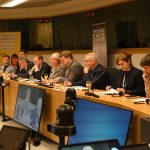
๐ 12 Nov, 2025, ๐ European Parliament, Brussels
47% of citizens in some European countries lack basic digital skills, with 42% of individuals aged 65+ excluded from essential services. Without accessible alternatives, many are left behind.
20-22% of rural households struggle with internet access, compared to just 8-10% in urban areas. Limited connectivity creates barriers to essential services, leaving those without reliable internet at a disadvantage.
Many digital services lack inclusivity, preventing persons with disabilities from accessing key information. Issues like poor contrast, lack of alternative text, navigation challenges, and limited digital literacy make accessibility difficult. Ensuring digital choice is essential to include everyone.
Only 43% of citizens believe their digital rights are protected, highlighting concerns over privacy, security, and control in digital spaces. Many fear leaving a digital footprint, reinforcing the need for secure, transparent, and alternative ways to access information.
Stay informed about the latest updates and progress in our campaign.
Slovenian newspaper Delo published an article on 9 January 2026 examining the impact of digitalisation on postal services and the future of traditional letter communication in Europe. The article explores the rapid decline in letter volumes, the impact on postal infrastructure, and the potential social consequences of moving towards a fully digital communication environment. The […]
โWith paper mail, itโs easier for me hold it, read it and organize my record keeping for important documents in paper format. I donโt have to get swamped with digital overload or worry about losing or deleting important information.
Paper mail is reliable and tangible and is a secure and private way to manage & file my business correspondence.โ
๐ฎ๐ช IRELAND
As a student, I daily use e-conversation channels and social media with my schoolmates and friends. I like it because it is easy, fun, and always available. But when I think of messages received from the state, bank, and other institutions, I prefer having them on a piece of paper. I just find on-paper written messages more serious. I feel more secure saving some official things on paper. The same situation applies when receiving a bill that serves as the basis for some guarantee services. I prefer having it on a piece of paper.
๐ธ๐ฎ Slovenia, Age 18
โI have been forced by my mobile phone provider and visa card banker to receive e-invoices! Since then I lose control on my on those bills and can't compare and verify if what they invoice me is correct! Due to these e-invoices I forget to pay and get expensive fines! I want my paper invoices back to keep my administration well under control.โ
๐ง๐ช Belgium
โAlthough I’ve had an intellectual job, let’s say, I haven’t adjusted to this technology part. There are people around me, of course, who use technology, digitalization, as you call it, but I don’t trust it. I still get my pension by post, I still pay with cash and the postman still brings me my bills… I’m better that way, I feel more confident, I know what I have to do and how to do it. This way, with technology, I don’t have the same security.โ
Bucharest, Age 67
โI know from children, yes. About the internet, about all that. From grandchildren, from kids, they use it. I just look and I don’t know how, I don’t know how to use it and I don’t need to. I wouldn’t have time, even though I’ve been retired for so many years, I wouldn’t have time to sit and surf the internet, I have other things to do. I haven’t caught up with these times, but I don’t mind, I don’t need a computer.โ
Neamศ, Age 77
โI am 80 years old. I’ve lived here in the mountains since I was born. What I was able to learn as a child, that’s what I learned. I don’t know about computers and other things, I know that the postman comes with my pension, leaves me the coupon, leaves me the envelopes with the utility bills, electric current, cable TV, gas, and from here, I have no more work. Working in the country, with the animals, the garden, chopping wood, that’s what I’m good at.โ
Vรขlcea, Age 88
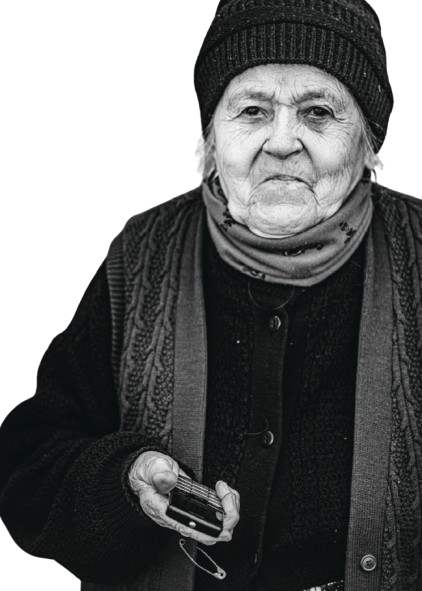
โI have one of these pocket phones. It has buttons and a small screen. I plug it in at night to charge the battery, like my son taught me, so I can talk to them when they call me. I don’t know about digitization, I don’t know what it is. I caught the war, it wasn’t like that at that time, what do you say.โ
Alba, age 80
โI have problems using technology, using the phone, maybe also because I haven’t done a learning course. Anyway, I use it very little, I’m also afraid of that, because I’ve heard that there are all kinds of scams and I’m wary. I only talk on the phone, I have no other relationship with the phone (no: digital technology). I also find it complicated to use the washing machine, which has all sorts of sensors and electronic programming. Maybe it would be useful to have a government program, a course to learn how to use technology.โ
Bucharest, Age 71
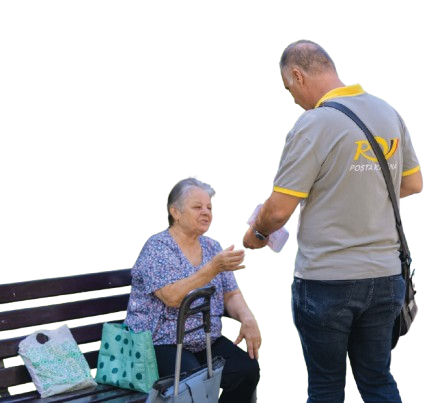
โI don’t have a smartphone, I don’t use technology, I don’t turn to anyone to help me with technology, with the internet. Everything I need, information, news, I get from communicating with people. I’m behind in science. I prefer to get my pension and all that, written, cash, paper money. The postman helps me a lot, he plays an important role for me, because he brings my money home, I have security.โ
Bucharest, Age 75
โI’m not very tech-savvy, but I enlist the help of my family, at least once a week, if not more often, to help me with various things in this area, the internet. That way I have more access to information, not just from TV. But it’s through the postman that I get my pension, it’s through him that I get all the news I should know. Without the postman, first of all, I wouldn’t receive my pension, and secondly, as I was saying, we wouldn’t be up to date with all the necessary information that we need to have. At our age, the connection with technology is a bit more difficult.โ
Bucharest, age 65
47% of citizens in some European countries lack basic digital skills, with 42% of individuals aged 65+ digitally excluded, hindering access to essential services.
20-22% of rural households experience internet connectivity issues, compared to 8-10% in urban areas, creating barriers to vital digital services.