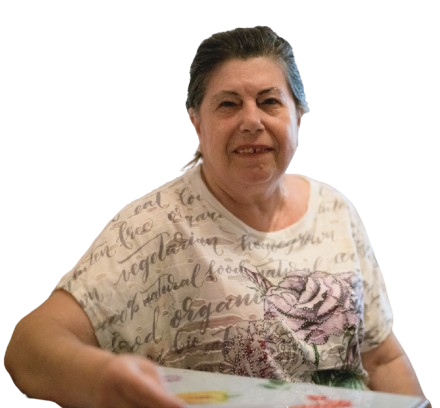
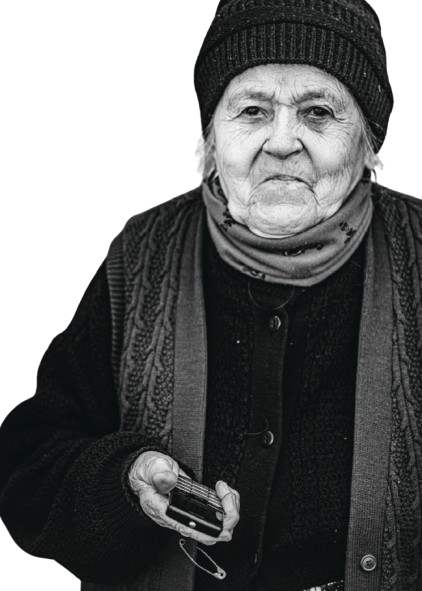
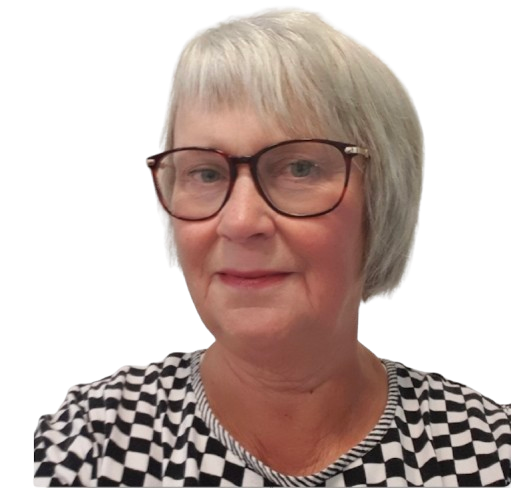
I don’t have a smartphone, I don’t use technology, and I don’t turn to anyone for help with technology or the internet. Everything I need—information, news—I get by communicating with people. I’m behind in terms of science. I prefer to receive my pension and everything else in written form, as cash, paper money. The postman helps me a lot; he plays an important role in my life because he brings my money home, giving me a sense of security.
Living offline: Relying on people,
not technology,
for
news and security."
Eremia Iuliana
🇷🇴 Bucharest, Age 75
“It’s easier for me to organize and reference important documents in paper format. I don’t have to deal with digital clutter or worry about computer systems crashing. Paper mail is reliable and tangible and is a more straightforward way to manage my business communications.”
"As a small business owner, I
rely on physical mail for
accurate record keeping."
URSULA MCDONNELL
🇮🇪 IRELAND
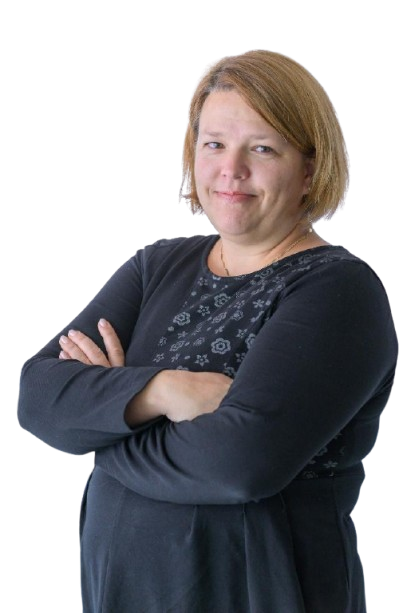
I am a very creative person, so I have been using paper forever. I adore my own writings being safely saved in a paper notebook. I use a different notebook for every single topic I am working on. Regarding e-mails, of course, I use them—they make communication much easier and faster. However, I don’t take bank e-mails seriously at all. I’m always stressed that they might be fake, and I don’t even open them. But I trust the messages I receive from the bank through traditional mail. I also find it easier to keep track of paid and unpaid bills when I have them in paper form. It’s easier to check the synchronization and be sure which bills have been paid and which haven’t.
"I use emails daily, but for important
messages and bills, I trust
paper for security."
Erika V.
🇸🇮 Slovenia, Age 24
I have to admit that I like the convenience of e-readers, but I am a firm believer in the good old book. Nothing beats a good book. A paper book has a charm of its own that enhances the story and makes it ten times better. That, along with the different cover art that tells a unique story each time, is priceless and, in my opinion, would otherwise be lost. Aside from my love for books, one area where I am skeptical and prefer the use of paper is notices or documents from government institutions and similar organizations like banks. With all the scams and constant notifications, I have to say that I prefer the certainty that paper offers.
"I enjoy e-readers, but nothing
beats a paper book; for official
notices, I trust paper for security."
Maj R.
🇸🇮 Slovenia, Age 24
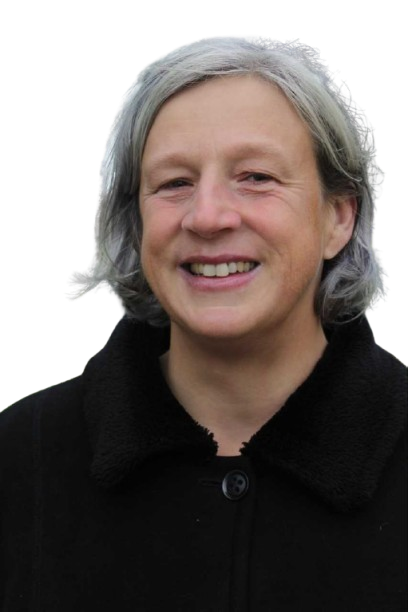
As a parent, the school really doesn’t know how to make information accessible. They provided my son with an achievement journal that the teacher can write in, but I can’t read handwriting, and they offered no alternative to that. They also issued a reading journal for parents to complete, but I can’t see well enough to write in it, so I had to produce a large print version myself to complete it for my son. I think schools focus on the pupils but are not very good at making reasonable adjustments for parents.
Most service providers still require disabled people to request information in alternative formats rather than offering it upfront, meaning disabled people have to work harder to access information that non-disabled people take for granted. There are still times when I am provided with inaccessible information, and when I suggest that someone read it for me, they fail to see how that removes control and choice from disabled people.
"Schools often overlook accessibility for
parents, leaving disabled individuals
to work harder for information."
Michelle de Oude
🇬🇧 United Kingdom, Age 49
I am 80 years old. I’ve lived here in the mountains since I was born. What I was able to learn as a child is all I know. I don’t understand computers or other modern things. I know that the postman comes with my pension, leaves me the coupon, and delivers the envelopes with the utility bills—electricity, cable TV, gas—and from there, my work is done. Working in the countryside with the animals, the garden, and chopping wood—that’s what I’m good at.
I’m 80 years old. I’ve lived in the
mountains all my life,
mastering the land and its rhythms."
Eva Marin
🇷🇴 Vâlcea, Age 88
But I support him when he needs help, whether it’s paying bills, making a paper copy of a document from his phone, picking up his medication, or scheduling a doctor’s appointment.
"My partner gets quite frustrated
at times with the
digitalisation of services"
Kerstin Jönsson
🇸🇪 Sweden 71
Anders Johannesson
🇸🇪 Sweden 65
"I use digital channels daily, but
for official messages and bills, I
trust paper—it feels more secure."
»As a student I daily use e-conversation cannels and social media with my schoolmates and friends. I like it because it is easy, fun and always available. But when I think of massages recieved by the state, bank and other institutions, I prefer having them on the piece of paper. I just find »on paper written massages« more serious. I just feel more secure to save some official things on paper. The same situation is when recieving a bill that is a base for some guarrantee services…, I prefer having it on a piece of paper.«
Žan Luka B
🇸🇮 Slovenia, Age 18
"I use paper for my creative work,
and for bank messages and bills, I
trust paper mail—it feels safer."
»I am a very creative persom, so I use paper since forever. I adore my own writtings being savely saved in paper notebook. I use different notebook for every single topic I am working on. Related to e-mails, of course I use them, they make communication much easier and faster. But I don’t take bank e-mails seriously at all, I’m always stressed that they might be fake and I don’t even open them. But I trust the messages I receive from the bank by traditional mail. I also find it easier to keep track of paid and unpaid bills when I have them in paper form. It’s easier to check the synchronisation and be sure which bills have been paid and which haven’t…«
Erika V.
🇸🇮 Slovenia, Age 24
"I love the charm of paper books,
and for important notices and
documents, I trust paper"
»I have to admit that I like the handiness of e-readers, but I am a firm believer in the good old book. Nothing beats a good book. A paper book has a charm of its own that translates into the story and makes it ten times better. That and the different cover art that tells a different story each time. That is priceless and would otherwise in my opinion, be lost. Other then my love for books, one aspect I am skeptical about and where I prefer the use of paper is notices or documents from government institutions and similar institutions like banks. With all the scams and constant notifications, I have to say that I prefer the certainty that paper offers.«
Maj R.
🇸🇮 Slovenia, Age 24
"As a parent, I value clear
communication but schools often
overlook accessibility for us."
As a parent the school really don’t know how to make information accessible. They provided my son with an achievement journal that the teacher can write in, but I can’t read handwriting and they had to alternative to that. They also issue a reading journal for parents to complete which I can’t see to write in, so I had to produce a large print version of it myself so I could complete it for my son. I think schools focus on the pupils but do not seem to be very good at making reasonable adjustments for parents. Most service providers still make disabled people request information in other formats rather than offering it up front so disabled people have to work harder to get access to all kinds of information that non disabled people take for granted. There are still times when if I am provided with inaccessible information and suggest that someone read it for me, they do not see how that removes control and choice from disabled people.